
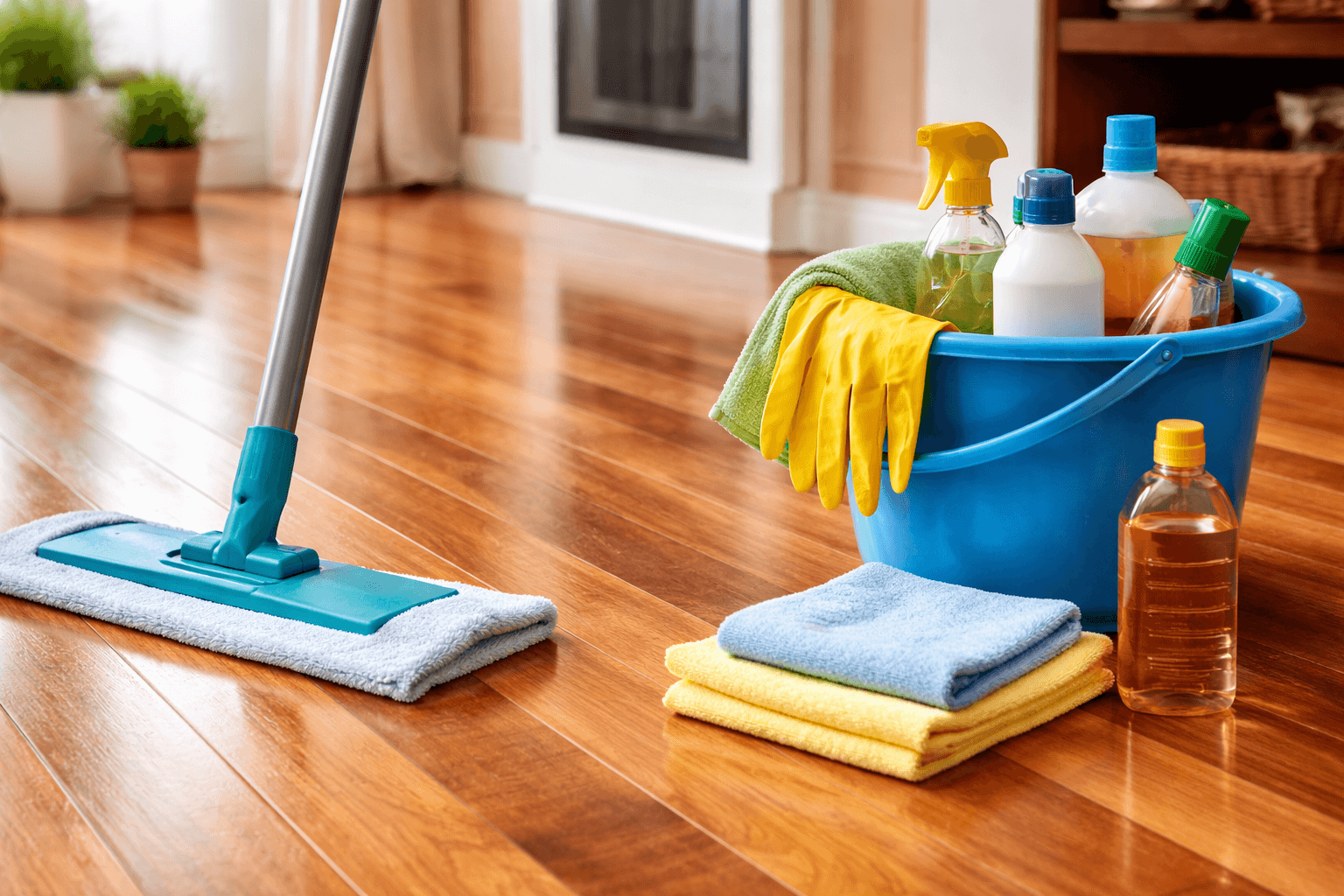
If your floors look cloudy, streaky, or “tired,” the problem is usually not the wood—it’s the cleaning method. This guide shows how to clean hardwood floors without dulling the finish, using simple steps you can do at home. The main goal is to remove grit and spills while avoiding too much water and harsh products.
Here’s the quick version that solves most issues:
- Dry clean first (dust and grit cause micro-scratches).
- Use a damp mop, not a wet mop.
- Pick a cleaner made for hardwood (pH-neutral is a safe baseline).
- Avoid steam, vinegar-heavy mixes, and waxy “shine” build-ups unless your floor finish truly needs it.
Now let’s break it down so you can fix dullness and keep the shine you already have.
Why do hardwood floors get dull in the first place?
Hardwood usually looks dull for one (or more) of these reasons:
- Too much water: Water can seep into seams and leave haze, especially if you “flood mop.”
- Wrong cleaner: Some all-purpose cleaners leave residue that attracts more dirt.
- Product build-up: “Shine” sprays, waxes, and soaps can layer over time and make floors look cloudy.
- Grit and tiny scratches: Sand and dirt act like sandpaper when you walk on them.
Good cleaning is less about scrubbing hard and more about using the right order and the right moisture level.
How often to clean hardwood floors to keep them looking good?
People ask how often to clean hardwood floors because nobody wants to overdo it—or ignore it until it’s a mess. A simple schedule works best:
A realistic cleaning schedule
- Daily or every other day: Quick dry sweep or vacuum (especially in kitchens and entryways).
- Weekly: Damp mop high-traffic areas.
- Monthly: Full-room damp mop + baseboards check.
- Seasonally: Check pads under furniture, entry mats, and any dull build-up areas.
If you have pets, kids, or lots of foot traffic, you’ll likely damp mop more often. If you live alone and wear socks inside, you can do less.
How do you know what finish your hardwood has?
You don’t need to be an expert, but this quick check helps you avoid mistakes.
Simple finish clues
- Most modern floors are polyurethane-finished. They have a protective topcoat and shouldn’t need waxing.
- Older waxed floors can look great, but they don’t like water and can turn cloudy if cleaned incorrectly.
- Oil-finished floors may need special care and periodic re-oiling.
If you’re not sure, use a gentle, hardwood-safe cleaner and avoid waxes or “polish” products until you confirm.
How to clean hardwood floors step by step (the safe method)
This is the method most homes can use without dulling the finish.
Step 1: Dry clean first (always)
Do one of these:
- Microfiber dust mop, or
- Vacuum with a hard-floor setting (no beater bar)
This step matters because grit is what causes tiny scratches that steal shine.
Step 2: Spot clean spills right away
Use a slightly damp microfiber cloth. Dry it after. Don’t let water sit.
Step 3: Use the right cleaner (less is more)
Pick a cleaner labeled safe for hardwood floors. Use the amount on the label. More cleaning does not mean cleaner floors usually; it means more residue.
If you prefer a DIY approach, keep it gentle and test in a hidden spot first.
Step 4: Mop correctly (damp, not wet)
How to mop hardwood floors without streaks or haze?
This is where most dullness starts.
The “damp mop” rules
- Wring the mop until it’s only slightly wet.
- Work in small sections (4–6 feet at a time).
- Follow the grain of the wood.
- Rinse/refresh your pad or mop water when it looks dirty.
- Dry any damp spots with a clean microfiber towel.
A microfiber flat mop is usually easier than a string mop because it controls water better.
Quick do-not-do list
Avoid:
- soaking the floor
- leaving puddles
- steam mops (heat + moisture can damage some finishes)
- Harsh scrub pads that scratch
When people ask how to clean hardwood floors “like professionals,” the secret is mostly: control water and avoid residue.
What should you avoid using on hardwood floors?
Some products can dull floors fast, even if they sound “natural” or “extra clean.”
Be careful with:
- Vinegar-heavy solutions: They can be too acidic for some finishes over time.
- Ammonia or bleach: Too harsh; can damage finishes.
- Oil soaps and waxy polishes: They can leave a film that looks cloudy and attracts dirt.
- Dish soap in mop water: It can leave residue unless you use a tiny amount and rinse well.
If your floor already has built-up, adding more “shine” product usually makes it worse.
How do you fix a cloudy or dull layer?
If your floor looks dull right after mopping, it’s often residue.
Try this:
- Dry mop or vacuum first.
- Damp mop with clean water only (very lightly) to remove leftover cleaner film.
- Dry with a microfiber towel.
- Next time, reduce the amount.
How can you keep hardwood floors clean longer?
These small habits protect the finish and reduce cleaning time:
- Put mats at every entry and shake them out often.
- Use felt pads under chairs and furniture.
- Take shoes off indoors when possible.
- Trim pet nails (this helps more than most people think).
- Clean spills quickly, especially around sinks and pet bowls.
And yes, your schedule matters again: how often to clean hardwood floors depends on your traffic, not on a perfect rule.
FAQs: Hardwood floors made easy
1. How often to clean hardwood floors if I have pets?
Dry mop or vacuum often (daily if needed). Damp mop high-traffic areas weekly, and spot clean spills right away.
2. What’s the safest way to mop hardwood floors?
Use a microfiber mop and keep it damp, not wet. Too much water is a common cause of dullness.
3. Why do my floors look streaky after mopping?
Usually residue from too much cleaner or a dirty mop pad. Use less product and refresh the pad more often.
4. Can I use vinegar to clean hardwood floors?
It’s not the best choice for many hardwood finishes because vinegar is acidic and may dull the topcoat over time. A hardwood-safe cleaner is usually safer.
5. What’s the easiest way to make hardwood shine again?
Remove grit, avoid residue, and use the correct cleaner for your finish. “Shine sprays” often create a build-up instead of real shine.
Final thought
Once you get the routine right, how to clean hardwood floors becomes quick and stress-free: dry clean first, damp mop carefully, and avoid products that leave film behind. If you want help getting a deep clean without dulling the finish, Radiant Home Cleaning Services can handle the details and help your floors look their best again.