
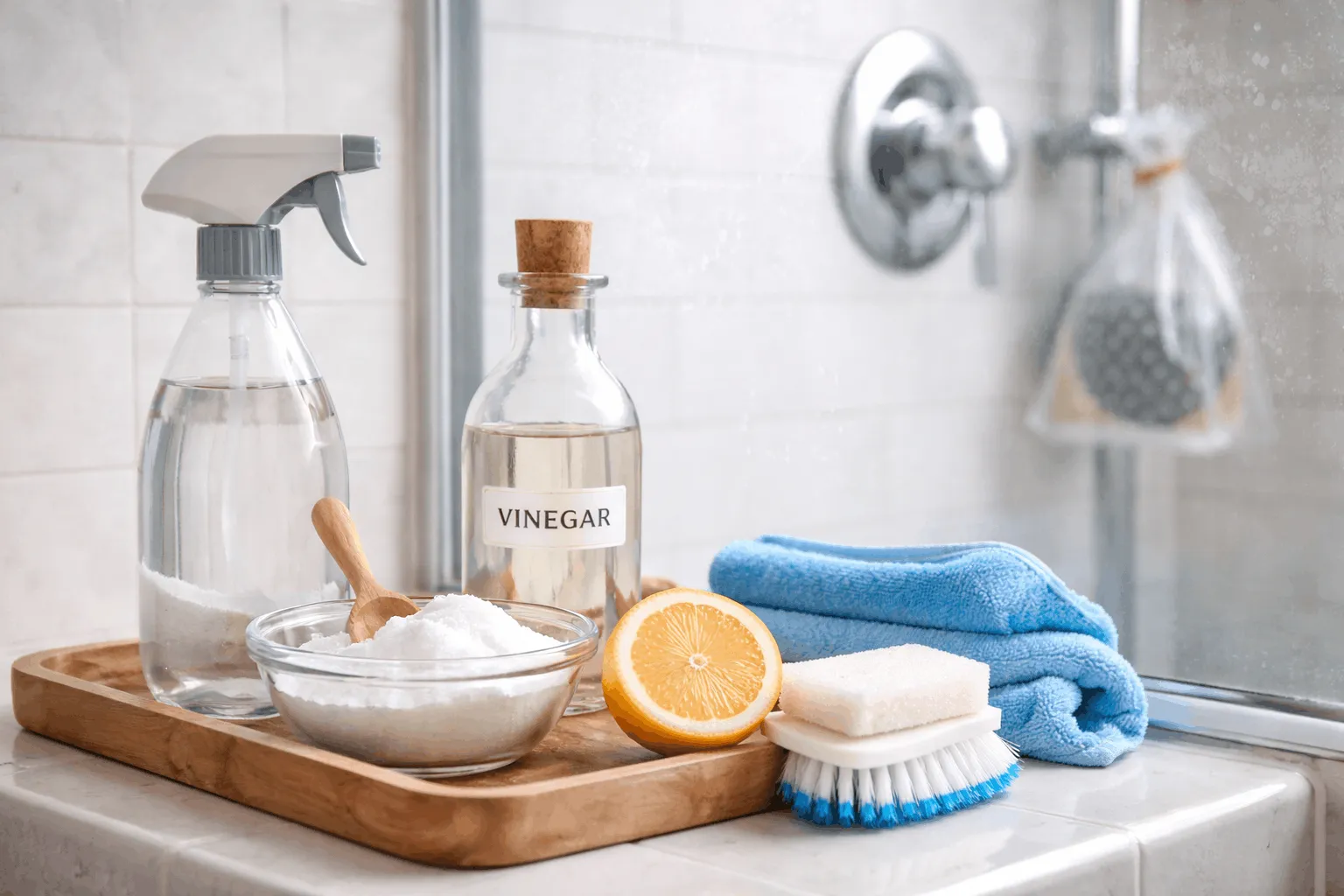
Hard water can make a clean bathroom look “dirty” again within days. If you’re seeing cloudy glass, chalky rings, or crusty buildup around fixtures, you’re dealing with hard water stains, mineral deposits left behind when water dries. The good news: you can usually remove hard water stains with the right method and a little patience. The better news: once you fix the root cause (drying and simple upkeep), those stains don’t have to keep coming back.
In North Idaho, this is especially common because hardness comes from dissolved calcium and magnesium in the water. The U.S. Geological Survey explains that water “hardness” is mainly the amount of dissolved calcium and magnesium. And local reports back it up. Coeur d’Alene’s water quality report lists an average hardness of 152.67 mg/L and labels it “Hard.”
Below is a practical, surface-by-surface guide (showers + faucets first), plus a prevention plan that makes cleaning easier long-term.
What causes hard water stains, and why are they so stubborn?
Hard water stains form when mineral-heavy water evaporates and leaves deposits behind. Over time, those deposits harden, especially on:
- Shower doors
- Faucet bases and handles
- Showerheads
- Tile and grout lines
- Drains and around the tub lip
These deposits can look white, gray, or slightly yellow. Sometimes they mix with soap scum (from body wash and shampoo), making the film thicker and harder to remove.
If you’re dealing with hard water Coeur d’Alene conditions (or similar mineral content nearby), you may notice stains build faster—especially on glass and chrome.
How do you remove hard water stains without damaging surfaces?
Most mineral deposits respond best to mild acids (like vinegar or citric acid). But not every surface likes the same cleaner, so the key is matching the method to the material.
Before you start, do this quick safety check
- Ventilate the bathroom (open a window or run the fan).
- Wear gloves if you have sensitive skin.
- Never mix bleach with acids (like vinegar) or other cleaners. Public health guidance warns that mixing bleach with other cleaners can cause dangerous reactions.
That last point matters because some people try “viral” cleaning hacks that combine products.
How to clean hard water stains on glass shower doors?
If your biggest issue is hard water stains on glass, use this simple method:
Step-by-step
- Pre-rinse the glass with warm water to loosen surface grime.
- Spray a 50/50 mix of white vinegar + warm water (or a citric-acid-based cleaner).
- Let it sit 10–15 minutes (don’t let it dry).
- Wipe with a microfiber cloth or non-scratch sponge.
- Rinse well, then dry the glass with a clean towel or squeegee.
If the glass is still cloudy, repeat once, then use a “wrap” method:
- Soak paper towels in vinegar solution.
- Stick them to the glass for 15–20 minutes.
- Wipe, rinse, and dry.
This method is ideal for hard water stains and shower problems that show up as haze or drip marks.
Important caution: If you have natural stone nearby (like marble or travertine), keep vinegar off it. Acid can etch some stones.
(And yes, this also works when you’re trying to remove hard water stains on framed glass edges—just avoid soaking any painted trim.)
How to clean hard water stains on faucet fixtures
When you’re fighting hard water stains on faucet areas, the goal is to dissolve minerals without scratching the finish.
Best approach for chrome or stainless
- Wet the faucet first.
- Apply vinegar solution (or citric acid cleaner) with a cloth.
- Let it sit 5–10 minutes.
- Use a soft toothbrush around seams and the base.
- Rinse and dry.
For aerators (the screen at the tip)
- Unscrew the aerator (if possible).
- Soak it for 20–30 minutes in a vinegar solution.
- Rinse and brush gently.
- Reinstall.
Drying is the secret weapon. Once the faucet is clean, wiping it dry after use cuts down hard water stains dramatically.
If your home has hard water Coeur d’Alene levels or similar, faucet bases and handles are usually the first places mineral crust shows up.
What about showerheads, tile, and grout?
Hard water builds up in the places where water sits the longest.
Showerheads
- Fill a zip bag with vinegar solution.
- Tie it around the showerhead so the nozzles are submerged.
- Soak 30–60 minutes, then run hot water for 1–2 minutes.
This helps with hard water stains, shower buildup, and can improve water flow.
Tile and grout
- Use a pH-safe cleaner for regular maintenance.
- For mineral spots, use a targeted citric acid cleaner on tile (test first).
- Avoid harsh abrasives that can dull the glossy finish of your tile.
If tile haze is actually soap scum, add a drop of dish soap to your vinegar mix (it helps lift oils), then rinse well.
Quick comparison table for common bathroom surfaces
| Surface | Best first-choice method | What to avoid |
| Glass shower doors | vinegar/water + dwell time + microfiber | abrasive pads that scratch |
| Chrome faucets | Vinegar/water on cloth, rinse, dry | steel wool, harsh abrasives |
| Showerhead | Vinegar bag soak | forcing tools that damage nozzles |
| Tile (non-stone) | citric/acid cleaner sparingly + rinse | leaving acids to dry |
| Natural stone | stone-safe cleaner only | vinegar/acidic cleaners |
This table is especially helpful if you’re dealing with hard water stains on glass and hard water stains on the faucet at the same time.
How do you prevent hard water stains from coming back?
Prevention is easier than scrubbing. If you do just two habits, pick these:
1. Dry the surfaces that stay wet
- Use a squeegee on shower glass after use (takes 30 seconds).
- Wipe faucets with a towel after brushing teeth.
2. Clean lightly, more often
Instead of heavy scrubbing once a month:
- Do a quick weekly wipe-down.
- Spot-t mineral rings early.
If you’re in a hard water Coeur d’Alene area, those small habits matter because hardness levels are high enough to redeposit quickly.
Extra prevention options (if stains are constant)
- Consider a water softener or a shower filter (varies by home setup).
- Apply a glass protectant (ask the manufacturer for compatibility).
Quick Answers for Stubborn Hard Water Stains
1. Why do hard water stains keep coming back so fast?
Because minerals redeposit every time water dries. Drying surfaces (glass + faucets) is the fastest prevention step.
2. What’s the safest way to remove hard water stains from glass?
Use a vinegar solution with dwell time and a microfiber. Avoid abrasives that scratch hard water stains on glass into the surface.
3. Can I use bleach for hard water stains?
Bleach is for disinfecting, not dissolving minerals. Also, don’t mix bleach with acids like vinegar—health agencies warn this can create dangerous fumes.
4. What works best for hard water stains on faucet bases?
A cloth soaked in a vinegar solution + gentle brushing around seams, then rinse and dry. It’s the simplest fix for hard water stains on faucet buildup.
5. When should I call professionals instead of DIY?
If stains are thick, recurring, or spread across many surfaces (especially in rentals or offices), professional help saves time and prevents damage.
If you’re tired of repeating the same scrub cycle—especially with hard water stains, shower buildup, and cloudy glass—getting a routine reset can make a big difference. For homeowners and businesses looking for cleaning services in Coeur d’Alene, a professional deep clean helps remove buildup safely and sets you up with an easier maintenance plan. And if you want a team that uses eco-conscious methods and detailed checklists, reach out to Radiant Home Cleaning Services for cleaning services in Coeur d’Alene that fit your schedule and space.